20 Pro Facts For Picking Floor Installation
Wiki Article
How Much Does Floor Installation Cost In Philadelphia?
Flooring costs in Philadelphia are among the areas where you'll see wildly divergent numbers depending on the place you look. And much of the data available online is generally national average data that isn't a reflection of local labor rates or is vague enough to be useless in the context of trying to budget a project. The Philadelphia metro area has unique pricing dynamics: the union-adjacent market for labor, an elderly housing stock which often throws up subfloor surprises, and a wide variation between low-cost flooring installers and licensed contractors with proper insurance. Here's a grounded breakdown of what installation actually costs within the city as well as surrounding counties as of right now.
1. LVP Installation Is Your Most Affordable Starting Point
The luxury vinyl plank is usually cost-effective for installation options in Philadelphia. The majority of LVP flooring suppliers within the region offer installation within $2.50 up to $4.50 per square meter for labor alone While mid-priced LVP flooring adding another $2-$5 for each square foot. All-in, the typical room can cost $4.50 to $9 per square foot. It's quick to put in, requires little prep work for the subfloor in many cases, and the floating technique reduces labor costs by a significant amount when compared to nail-down glue-down alternatives.
2. Hardwood Installation is more expensive -and it's for a good reason.
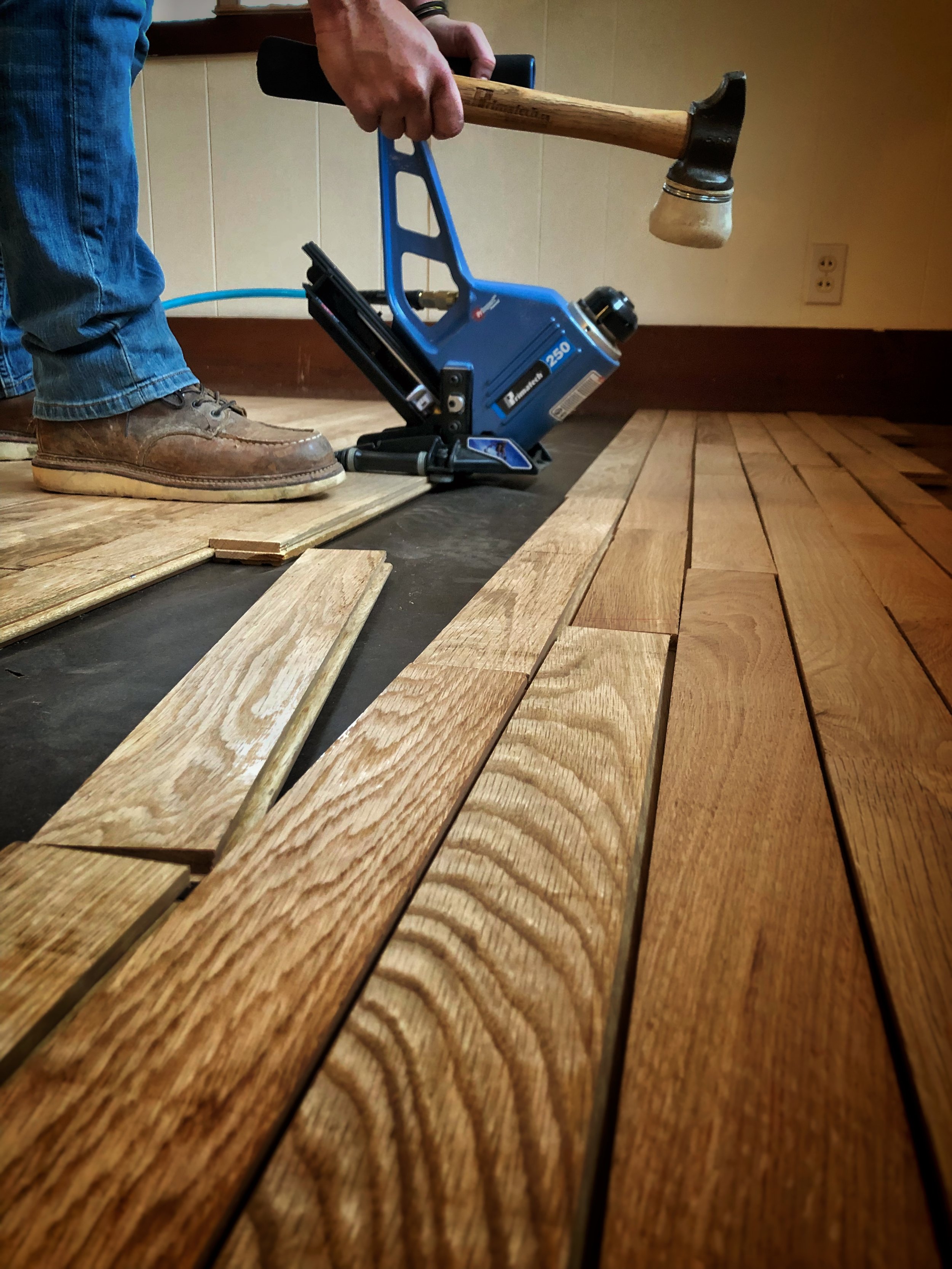
Solid hardwood installation in Philadelphia typically runs $6 to $14 per square foot for labor, depending upon the method of installation employed in conjunction with the builder. Nail-down hardwood sits at the higher end due to it requires greater precision, a proper depth for the subfloor, and longer installation time. It is a good idea to glue down hardwood onto concrete slabs. adds material costs for adhesive. The actual wood can vary wildly -- budget hardwood starts at about $3 per square foot and premium species such as white oak or hickory could cost between $10 and $14 per square foot before a nail is inserted.
3. The cost of refinishing hardwoods is lower than Replacement generally
If your hardwood floors are solid and structurally sound floor sanding and refinishing in Philadelphia generally costs between $3 and $7 per square footway less than taking them off and replacing. Custom staining of hardwood during refinishing adds costs, but is cheaper than installing new flooring. The caveat is that floors which were refinished repeatedly and have extensive water damage or are not thick enough to pass another time aren't necessarily candidates. A proper evaluation from an experienced flooring installer who's licensed will identify which side of this line you're in.
4. Tile Installation carries a Greater cost of labor
Ceramic tile and porcelain installation is the most labor-intensive flooring category. Philadelphia flooring contractors typically charge between $7 and $14 per square foot for tile installation labor and porcelain on the higher end due the cutting difficulty. Tiles with large-format dimensions, layouts that are diagonal, and bathroom tile installations with niches or borders push costs even higher. The costs for the tiles range between $1.50 each square foot for ceramic tiles to $15 or more for premium porcelain. If you've received an unsettlingly low price for tiles and you're not sure what's included, ask for specifics.
5. Laminate Installation Its Fall Between LVP and Hardwood
Laminate flooring installations in Philadelphia typically runs between $3 to $6 per square foot installed Materials are usually included at upper end of the range. It's a floating floor similar to LVP that's why the labor expenses are similar, however laminate is more difficult to work with on flooring that is uneven and more vulnerable to moisture. This impacts where it could install in the Philadelphia home. A lot of flooring installation quotes involve laminate, and it's not always the right choice depending on the space.
6. Subfloor Repair Can Be a Wildcard that catches homeowners off guard
This is what blows budgets most often. Subfloor repairs in Philadelphia such as patching wood rot, leveling, or replacing sections of old boards will cost you around $1-$3 per square foot. This will be added to your flooring installation expense, sometimes more. Older homes in Kensington, Germantown, West Philly and other areas are especially susceptible to this. Flooring estimates that don't contain a subfloor examination prior to giving you a final quote is to be viewed with caution.
7. The location within the Metro Will Influence the Price You Quote
The costs for flooring installation and costs for installation of flooring Bucks County, Montgomery County, Delaware County, and South Jersey aren't dramatically different from Philadelphia proper, but there are some differences. Suburban contractors can have lower overheads, while city jobs can include access and parking surcharges. If you're pulling quotes across several counties, ensure that your comparison is comparable to what's included. Materials such as subfloor preparation for furniture, moving furniture, and haul-away is handled differently by different contractors.
8. Getting Multiple Free Flooring Estimates Is Non-Negotiable
Many reputable flooring professionals in Philadelphia offer no-cost estimates. At least get three estimates before agreeing to anything. The range between the lowest and highest price for the same job usually ranges between 30-40 percent and the cheapest price is certainly not the only option however, nor is price the most expensive necessarily the best. The thing to consider is whether you can tell whether the contractor really assessed the subfloor's dimensions, and has priced in accordance with the requirements.
9. Engineered wood is a great choice at the middle price point
Engineered hardwood installation in Philadelphia generally costs between $5 and 9 per sq ft installed which is less than solid hardwood and more than LVP, but with its performance qualities, it's the best option in a number of scenarios. It's worth asking any flooring expert you've met with about including an engineered plank of wood on their price if you're split between vinyl and solid wood plank.
10. The lowest price rarely comes into The Actual Job
Experienced Philadelphia homeowners will tell you this story from personal experience. A quote that appears to be under market usually indicates that something isn't included: subfloor work, transitions, baseboards, or the proper acclimation of the material. Flooring installers who are licensed incorporate these factors into their estimates since they are aware that the task requires them. Unlicensed budget operators offer them in the hope of winning the bidding, and then provide to the client as add-ons once construction has begun. Be sure to have everything in writing before anyone pulls away your floor. Have a look at the best
licensed flooring installers Philadelphia for website tips including laminate flooring installation Philadelphia PA, hardwood floor resurfacing Philadelphia, glue down hardwood flooring Philadelphia, glue down hardwood flooring Philadelphia, hardwood floor installation Philadelphia, free flooring estimate Philadelphia, flooring contractors Philadelphia PA, LVP flooring Philadelphia PA, engineered hardwood installation Philadelphia, hardwood flooring Montgomery County and more.
Hardwood Refinishing Vs. Replacement: What Makes Sense?
Flooring made of hardwood in Philadelphia homes have history embedded in their design -- the original planks of flooring with oak strips in the form of a Germantown twin wide planks of pine in the Chestnut Hill colonial house, and decades-old hardwood floors in an Delaware County ranch that's seen three families. When floors become rough, the instinct is frequently and often to change them. But, in reality, replacing them isn't the optimal choice. Refinishing can be more expensive than but it does appear to be on the surface. The choice between sanding or recovering existing hardwood as opposed to pulling the floor and refinishing it depends on factors that only are clear when someone who knows what they're looking for takes a closer look at the floor. Learn how to think about the options before committing to either choice.
1. The thickness of your flooring is the initial What Determines Your Options
Solid wood is able to be sanded renewed several times during the course of its life, however, not forever. Every refinishing job removes a small amount of wood and once the floor has been taken down close to the tongue-andgroove fastening device beneath that, it's not able to be sanded again in a safe manner. The majority of solid wood is 3/4 inches thick, with about 1/4 inch of the material above the tongue that can be used for sanding. A flooring professional can measure remaining thickness by using an instrument placed in a hidden area -- the result far more important than any other, determines whether refinishing will be in the works.
2. Engineered Hardwood Includes a Narrower Refinishing Window
Engineered hardwood installations have grown dramatically across Philadelphia, Bucks County, and Montgomery County homes over the more than two decades. many homeowners are unaware that their flooring is engineered until the need to refinish is required. The real wood veneer layer on engineered wood is thinner than solid wood ranging between 1mm-6mm, depending on the material -- which limits the number of times the floor can be polished. Thin-veneer engineered flooring may be able to only handle a single careful finishing pass or not at all. Knowing what you've got before making the assumption that refinishing is feasible will save the expense of an estimate visit.
3. Refinishing is a lot less expensive option than Replacement in Most Cases
Floor sanding and refinishing in Philadelphia typically cost $3 to 6 dollars per sq ft. Full hardwood floor replacement -removal of the flooring, subfloor assessment, new flooring, and installation -- is typically $10 to $20 per square foot or more, depending on the species and the technique. For a 500 square foot area, this is the difference between one $1500-$3,000 job and a $5,000-$10,000 one. If your floor has adequate thickness and is free of structural issues, refinishing provides much of the visual appeal of new floors at a fraction of the cost.
4. Surface Wear and tear is never a reason to replace
Scratches, scratches, dullness small stainings, superficial discoloration are exactly the problems floor sanding and polishing is designed to deal with. They look more blemishes then they actually are. Sanding properly removes the damaged layer of wood completely and brings the floor back to bare wood, at when custom staining and finishing make the floor appear completely. Philadelphia homeowners who have to replace floors with damaged surfaces that they could have finished away taking a risk by deciding on aesthetics rather than fact.
5. The calculation of structural damage is altered The entire calculation is altered
Warping, cracking, water damage that is beneath the surface and is causing rot at the board levels, floors with numerous missing or loose sections differ from surface wear. Refinishing tackles surface issues -but it is not able to correct a floor that is moving from a structural standpoint due to moisture nor is it able to fix flooring that has subflooring beneath has failed. If structural damage is evident and the truthful assessment of a certified flooring installer could be that replacement is the only path to an area that will function correctly rather than just look better for a while.
6. The history of previous refinishing can affect the Current Decision
A floor made of hardwood that's been refinished or four times during its time may have small amounts of material remaining over the tongue, regardless of how thick it was at the beginning. The original hardwood in the interior of a Philadelphia property that has not been refinished -- something that is more common than people expect in older properties -- may have substantial remaining thickness even if it appears rough. The appearance of the floor isn't a reliable indicator of its potential for refinishing. The physical measurement, and in some cases pulling a vent from the floor to take a look at the cross-sections is how a professional actually determines what's left.
7. Custom Staining at Refinishing Time Can make a floor's character
One of the benefits of refinishing which is often overlooked is the ability to change the color of your floor completely. Custom staining hardwood in Philadelphia is a part of the refinishing process -- once the floor is sanded to its original wood, a stain must be applied before the finishing coats are lowered. Homeowners who have lived with orange-toned 1990s hardwoods for many years are often surprised when they discover the same boards can change into cool grey, a rich walnut, or a warm natural, depending on the species and the stain choice. A replacement isn't needed to change the appearance in a dramatic way.
8. Assembling new Hardwood to floors that are already in place is Harder Than It Sounds
One instance that could push homeowners to complete replacement is when just a little bit of flooring must be repaired -- a water-damaged section, an addition, an area that was carpeted previously. Making new hardwood match existing old hardwood in the rest of the house can be very difficult. The wood species, the cut lines, grain patterns, and years of patina don't match precisely when paired with a brand new piece of wood. Flooring contractors from Delaware County and South Jersey that are honest will inform you that a complete refurbishment of the complete floor area after patching is typically the only way to ensure visual consistency.
9. Replacement opens the doors to upgrading the material completely
Sometimes, the only option is replacement not due to the fact that refinishing cannot be done but because the existing floor isn't worthwhile to keep. Hardwood with a low grade that easily dents or floors with significant subfloor problems that need to be fixed regardless, or homes where the layout changes and the existing flooring no longer fits this is an instance where replacement allows a genuine upgrade. Switching from worn softwood to white oak, or from damaged natural hardwood to engineered best suited to your home's environmental conditions, is different choice than replacing a laminated floor without a reason.
10. Get the Assessment Before You Decide, not after you've Choosen
Refinish vs. replace choice should be made after an expert has examined the floor but not before. The majority of reputable flooring companies in Philadelphia provide free estimates including this type assessment: measuring the thickness of your floor, identifying of structural as opposed to. surface damage, a moisture assessment, and a concise description of the process involves in terms as well as timeline and final results. People who call for a quote on replacement usually have already talked themselves off the possibility of refinishing that they've not yet fully explored. Assessments are free. The replacement, if it does not prove to be necessary or not needed, isn't. Check out the top Check out the recommended luxury vinyl flooring Philadelphia for more recommendations including flooring installers South Jersey, hardwood flooring Montgomery County, floor sanding and refinishing Philadelphia, floating hardwood floor installation Philadelphia, licensed flooring installers Philadelphia, LVP flooring Philadelphia PA, waterproof flooring installation Philadelphia, tile flooring installation Philadelphia, flooring installers South Jersey, hardwood floor refinishing cost Philadelphia and more.
